Anime Speaks in Season Words Too: Reading the Food on Screen
A kaiseki menu tells you the season before the first dish arrives. Japanese anime does the same thing with a bowl of dango or a festival shaved ice. A short glossary of what's really on the plate.
In haiku, a single word can carry a whole season. Write "cicada" and the reader feels the heat of August; write "persimmon" and the air turns crisp. These are kigo, season words, and a good kaiseki menu borrows them so the card in front of you tells you what time of year it is before the first dish arrives. (We wrote about that in Reading a Kaiseki Menu Written in Season Words.)
Japanese animation does exactly the same thing, only with pictures. When a character bites into something on screen, the food is rarely there just because people get hungry. It is a season word, a mood and sometimes a plot point, all on one plate. Once you know the vocabulary, you start reading anime the way a regular reads the counter.
Spring: three-colour dango under the cherry trees
Any anime that sends its characters to a hanami, a cherry blossom picnic, will put the same few things on the blanket: a stacked bento, a bottle of something to share, and a skewer of hanami dango in pink, white and green. The colours are a season word in themselves, usually read as blossoms, lingering snow and the new leaves to come. Wrapped in a salted cherry leaf, sakura mochi plays the same role. If you see either one, the story has moved to April, and very often to a new school year, a new class and a fresh start.
Summer: the festival food stall episode
Almost every long-running series has one: the summer festival episode. Yukata come out, fireworks go up and the characters drift between food stalls. The menu is so fixed it may as well be printed: yakisoba fried on a hot plate, takoyaki octopus balls, glossy candied apples and, above all, kakigori, shaved ice drowned in bright syrup. Kakigori is a genuine haiku season word for summer, and on screen it almost always means two characters are about to have an important conversation while their tongues turn blue.
Studio Ghibli turned the food stall into something darker. In Spirited Away, Chihiro's parents help themselves to an unattended spread in a deserted town and are turned into pigs for their greed. The scene works because every Japanese viewer knows the rule underneath it: food is offered and received with gratitude, never simply taken.
Autumn: the moon, the rabbit and the egg
Autumn's great food custom is tsukimi, moon viewing. Families set out a stack of round white tsukimi dango, pampas grass and seasonal produce to thank the harvest moon. In Japanese folklore, the shape on the moon is not a man's face but a rabbit pounding mochi, which is why rabbits and rice cakes turn up together in so much autumn imagery. Fans of Sailor Moon will notice that its heroine, Usagi, has a name that means "rabbit", which is no accident in a story about a princess from the moon.
Pop culture has gone further still. Every autumn, fast-food chains in Japan roll out "tsukimi" menus built around a fried egg, its round yolk standing in for the full moon. McDonald's Japan has sold a Tsukimi Burger for decades, and it is a fair example of how a thousand-year-old custom survives perfectly happily inside a burger bun. Later in the season, listen for the call of the yaki-imo truck selling roasted sweet potatoes; in anime it is shorthand for the first truly cold evening.
Autumn is also the richest season at the sushi counter. See Seasonal Fish to Look Out for in Autumn for what the chef is likely to be excited about right now.
Winter: kotatsu, mandarins and a bowl of soba
Winter in anime has a near-universal image: characters tucked under a kotatsu, the heated low table, with a bowl of mandarin oranges (mikan) in the middle. A pot of oden simmering on the side, or a stop at a convenience store for a stick of it on the way home, signals the coldest part of the year.
On New Year's Eve, look for toshikoshi soba, "year-crossing" noodles. Long buckwheat noodles that snap easily are eaten to let go of the year's hardships and wish for a long life. The next morning brings osechi, the lacquered New Year's boxes where every item carries a meaning, from black beans for good health to herring roe for many children. If you have read our piece on why the lacquerware is part of the meal, you will recognise the tiered boxes immediately.
When the food is the story
Some of the most famous scenes in anime are less about the season and more about what a meal means between people.
- The onigiri in Spirited Away. When Haku gives Chihiro a few plain rice balls and she breaks down in tears eating them, nothing about the food is fancy. That is the point. Onigiri are what a parent makes for a child; it is comfort, not cuisine.
- The ham on the ramen in Ponyo. A simple bowl of instant noodles becomes a small miracle when the ham is added at the last moment. Ask anyone who grew up in Japan and they will tell you that bowl looked better than any restaurant ramen.
- The bento in Demon Slayer: Mugen Train. Rengoku working his way through a tower of station lunch boxes, announcing "umai" (delicious) after each one, became one of the most quoted moments in recent anime. It also introduced a lot of viewers to ekiben, the regional boxed lunches sold at train stations, each one a little edible postcard of its town.
- The sake in Your Name. Mitsuha makes kuchikamizake, an ancient form of rice wine offered at a shrine, and the bottle later becomes the hinge of the whole plot. It is a reminder that sake in Japan began as an offering to the gods long before it was a drink at the counter.
What it means at the counter
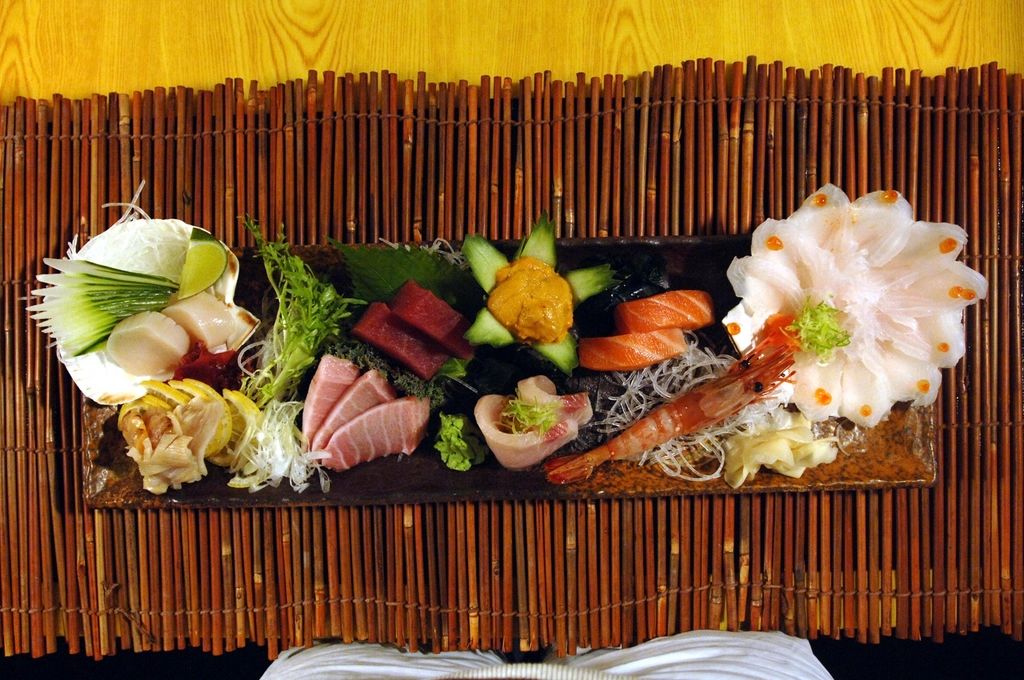
An omakase meal speaks the same language. The chef's choices are a sentence written in season words: the fish that is at its best this month, the garnish that hints at the weather outside, the bowl the course arrives in. Anime simply makes that grammar visible to people who may never have sat at a counter.
So the next time a festival episode cuts to a stall, or a winter scene pans across a kotatsu, take a second look at the plate. It is telling you exactly what time of year it is, and probably a little about who these people are to each other. And if all that watching makes you hungry, a ramen kit and a slice of ham are a perfectly respectable place to start.
