Why Real Wasabi Is Grated in Front of You
The green paste on most plates isn't wasabi at all. Why a good counter grates the real root to order, and what that small ritual tells you about the meal.
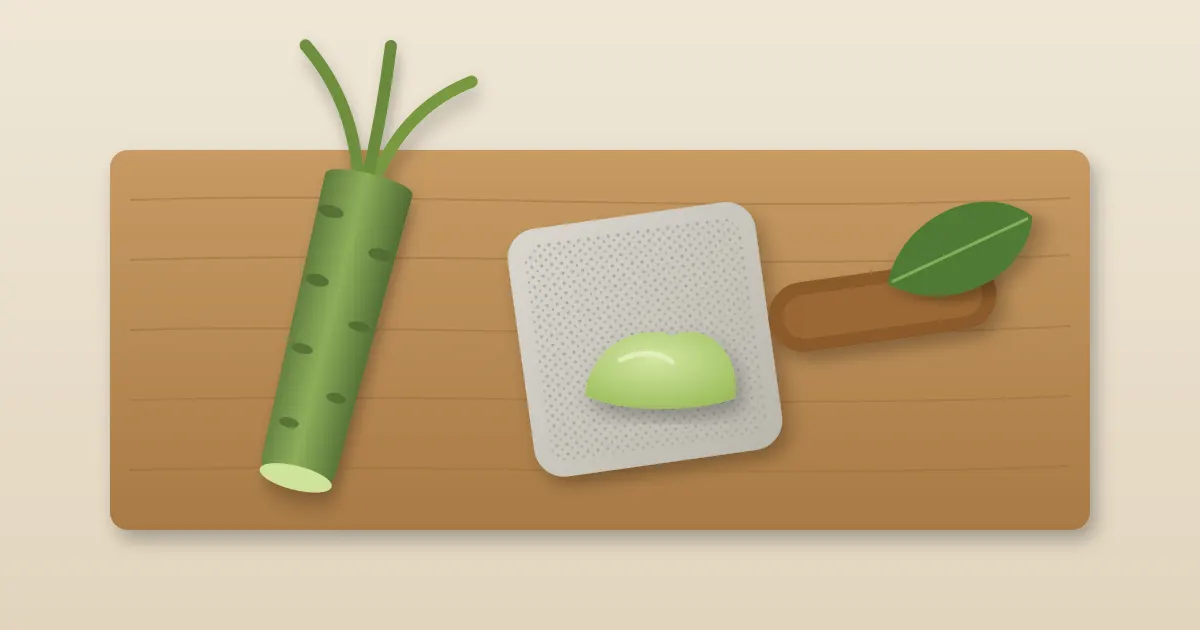
At a good sushi counter, there is a moment that is easy to miss. Before the first few pieces, the chef takes a knobbly green root, holds it upright against a small paddle and grates it in slow circles. A minute later, a little of that pale green paste disappears between the fish and the rice.
That root is real wasabi, and the reason it is grated in front of you says a lot about how the rest of the meal is put together.
Most "wasabi" isn't wasabi
The bright green paste that comes in tubes, sachets and powders is usually horseradish, mustard and green colouring, sometimes with a small amount of real wasabi added. It is cheaper, it keeps for months, and it delivers a quick, sharp heat.
Real wasabi is the rhizome of Eutrema japonicum, a plant that grows in cold, clean, running water. It is slow and difficult to farm: a root typically takes a year and a half to two years to mature, and much of Japan's supply comes from mountain streams in regions such as Shizuoka and Nagano. That scarcity is why it is expensive, and why so few places use it.
Why it has to be grated to order
Wasabi's heat isn't sitting in the root waiting. It forms when the cells are broken open by grating, releasing compounds that react with each other and give off that rush of pungency. The aroma peaks within a few minutes and then begins to fade. Leave freshly grated wasabi for a quarter of an hour and much of what made it special has gone.
So a counter that cares grates it in small amounts, as the meal goes on, rather than preparing a bowl in the afternoon.
The sharkskin grater
The paddle is traditionally a samegawa oroshi, a grater covered with dried sharkskin. Its fine, rough surface breaks the root down into a smooth, creamy paste rather than shreds, which brings out more flavour and sweetness. Chefs grate from the top of the root in a gentle circular motion, because pressing hard or sawing back and forth gives a coarser, harsher result. Like a good knife, it is one of the tools a chef looks after carefully; you can see more in a chef's knife roll, opened.
What real wasabi tastes like
If you are used to the tube version, the real thing can be a surprise. The heat is softer and rises through the nose rather than burning the tongue, and it fades quickly. Underneath it there is something green, fresh and slightly sweet, closer to a vegetable than a condiment.
It is meant to sharpen the fish, not hide it. With fatty tuna or salmon it cuts the richness; with delicate white fish it lifts the flavour without overwhelming it.
How to eat it at the counter
At an omakase counter, the chef has already decided how much wasabi each piece needs and put it between the fish and the rice. A few habits help you taste it as intended:
- Don't add more. If a piece arrives seasoned, it is ready to eat as it is.
- Don't stir wasabi into the soy sauce. It muddies both, and if a piece needs soy, a light touch on the fish side is enough.
- Eat it straight away. The wasabi, like the rice, is at its best in the first moments.
- Ask if you prefer less. Most chefs are happy to adjust, and it is far better than scraping it off.
Whether you use chopsticks or your fingers, both are correct.
Wasabi at home
Fresh roots are hard to find outside Japan and need to be used soon after grating, so at home a little goes a long way. If you can't get the real thing, add a small dab of your chosen paste to the fish rather than the soy, and try other condiments with a fresh, aromatic heat. Our yuzu kosho paste, made with citrus peel and chilli, is lovely with seared fish and white fish alike.
A small ritual worth noticing
Grating wasabi to order takes time, costs more and changes nothing about how a dish looks. It is done purely because it tastes better. Next time you sit at a counter and hear that quiet scraping before the first piece, you will know the kitchen is paying attention to the details that matter most, and that the meal is probably in good hands.
For the same care at home, our Chef's Tasting Plate is prepared by our chefs from morning-market fish and rice seasoned in house.