How to make Japanese tamagoyaki at home: tips for the perfect rolled omelette
A practical guide to making tamagoyaki, the classic Japanese rolled omelette, with step-by-step advice and mistakes to avoid.
The first time I tried making tamagoyaki, my omelette stuck to the pan and tore in three places. I’d watched videos of perfect golden rolls and thought, how hard could it be? Turns out, there are a few tricks to getting tamagoyaki right, starting with the pan and ending with the seasoning.
Choosing the right pan and tools
Tamagoyaki is easiest in a rectangular or square pan called a makiyakinabe, but you can use a small nonstick round pan if that’s what you have. Just don’t try this in cast iron or stainless steel unless you enjoy scraping egg off a surface for half an hour. Use a silicone spatula or cooking chopsticks to help roll the omelette; a wide spatula can make lifting easier for beginners.
Prepping the egg mixture
The classic mix is eggs, dashi (or water), sugar, mirin and a splash of soy sauce. Some people add a bit of salt. You want everything blended until smooth, but avoid whipping too much air in. A few gentle strokes with chopsticks does the job. The flavor should be balanced: not too sweet, not too salty. Taste the raw mixture if you’re unsure (just a drop).
The cooking process
Heat the pan over medium-low and brush it lightly with oil. Pour in just enough egg to cover the bottom. Let it set until the surface is still slightly wet, then roll it up gently from one end. Push the rolled egg to one side, brush the empty part with a little more oil, and add more egg mixture. Lift the roll so the new egg flows underneath, let it set, and roll again. Repeat until you’ve used all the mixture.
The most common mistake is turning the heat up too high. Low and slow keeps the layers tender and golden, not brown and rubbery. If the egg sticks, it usually means the pan isn’t hot enough when you start, or you forgot to re-oil between layers.
Finishing and serving
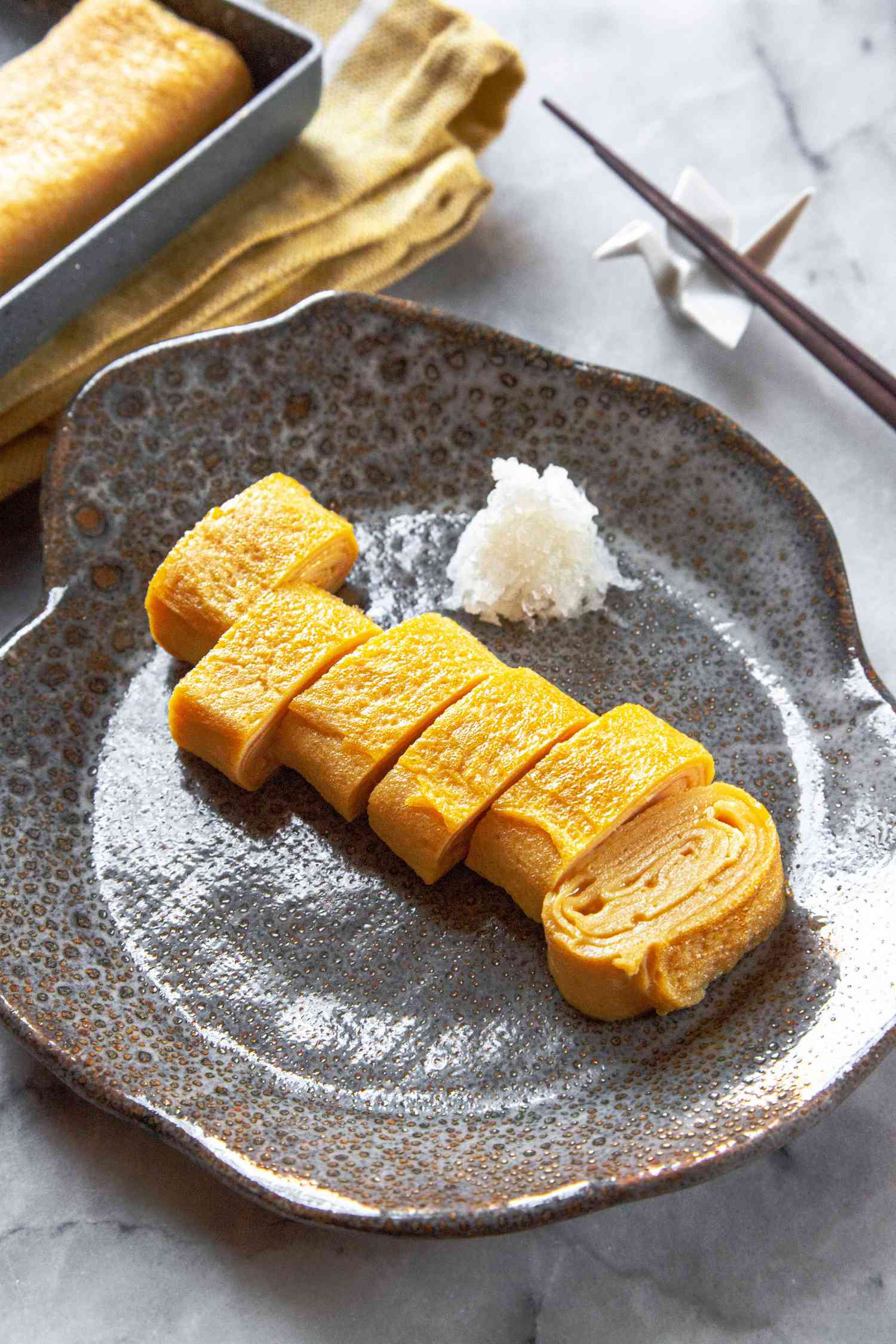
Once your roll is done, turn it out onto a bamboo mat or a sheet of parchment, roll it up gently, and let it rest for a minute. This step helps the omelette keep its shape. Slice with a sharp knife, wiping the blade between cuts for clean edges.
Tamagoyaki is eaten warm or at room temperature, sometimes with a dab of grated daikon. Serve it as part of a sushi set, in bento, or just with steamed rice. The first slice is always the messiest, but the next ones should come out neat, practice really does make a difference.
A few tips
- Don’t skip seasoning your egg mix, but don’t overdo the sugar.
- Oil the pan lightly but often. Too much oil and the layers slide; too little and they stick.
- If you don’t have dashi, just use water. It’s better than using instant dashi powder that tastes artificial.
- Cut with a gentle sawing motion, not straight down. This keeps the slices tidy.
I still mess up the first roll sometimes, but the flavor makes up for it. Homemade tamagoyaki never looks like the ones in sushi shops, but it always disappears fast at the table.